Thank you! Your submission has been received!
Close Skills Gaps with Verified Training
From identifying capability needs to delivering training and verifying completions - coordinate workforce development that drives verified competency, not just attendance certificates.


Join leaders who adopt the new standard for workforce development
The Gap Between Training Delivery and Workforce Capability
You discover Worker A needs confined space training when they're already assigned to a project starting in 3 days. Scramble to find training, rush the booking, hope they pass, delay project start if they don't.
Meanwhile, 15 other workers across your contractor panel need the same training in the next 60 days - but you don't know it yet because training needs are discovered reactively, one worker at a time.

How Integrated is Your Training Delivery?
Before we show you a better way, take a moment to assess your current reality. How many of these scenarios sound familiar? If you checked 3+, MyPass can help.
Training delivery and compliance tracking happen in separate systems
We discover training needs reactively when projects need workers
Manual processes to update worker profiles after training completion
Difficult to coordinate training across multiple contractors
Workers learn about expiring qualifications too late for efficient re-training
No visibility into training pipeline vs. upcoming capability needs
L&D Integrated with Workforce Compliance
MyPass connects training delivery to verified workforce capability - ensuring training investment translates to deployment-ready workers.
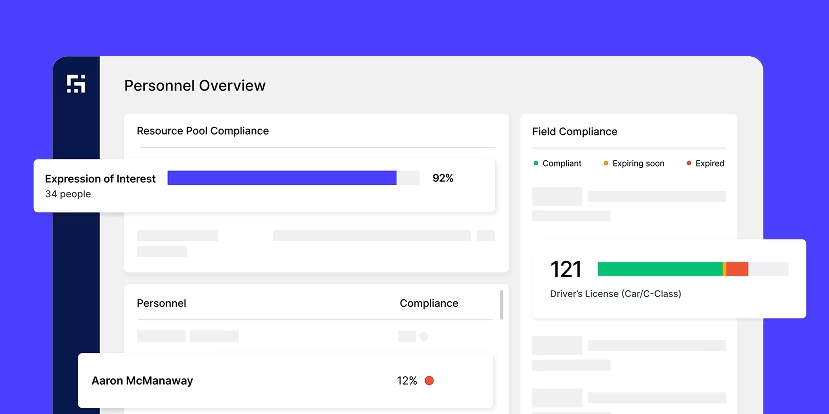
Comprehensive Learning & Development Features
How you use these capabilities depends on your role in the workforce ecosystem
Whether you're an asset owner coordinating training across a contractor supply chain, or a service provider developing your workforce to meet evolving client requirements, MyPass connects training delivery to verified workforce capability. The same integrated system serves different workflows - reducing duplication while building competency.
The Impact of Data-Driven Contractor Management
47%
Increase in training completion rates
35
Fraudulent certificates intercepted monthly (average)
32%
Reduction in administrative time managing contractor compliance
Sign up for our newsletter


Related Solutions for Comprehensive Workforce Management
L&D is most powerful when connected to the systems that identify training needs and measure training impact.
Helping our customers do more
Works With Your Existing Training Systems
Learning Management Systems (LMS)
Clui Learning, other LMS platforms for course delivery
HR Systems
Training records in employee files
ERP Systems
SAP, Oracle integration for contractor records
Site Access Control
Automated compliance checking at gates, access revocation for expired qualifications
Training Providers
Coordinate with external RTOs and corporate training providers
Reporting Tools
Export to PowerBI, Tableau for custom training analytics
Where Does Your Organisation Stand?
L&D practices evolve through predictable stages as organisations move from reactive training delivery to strategic capability building. Most operations start at Stage 1, driven by mandatory compliance training and hope that courses prevent incidents. Progressive organisations advance through coordination and integration before reaching Stage 4 - where training investment directly drives verified workforce capability and measurable business outcomes. Understanding where you are today helps clarify the path forward. Which stage best describes your current approach?
"We Deliver Mandatory Training"
- Training driven by compliance requirements and incident responses
- Limited coordination between training delivery and workforce planning
- Attendance tracked, but effectiveness uncertain
- Workers receive certificates, but gap remains between training and verified capability
- Training treated as cost center, not strategic investment
Typical Trigger to Advance: Repeated discovery that workers completed training but qualifications weren't reflected in compliance systems, mobilization delays from training coordination gaps, or recognition that training investment doesn't translate to improved deployment readiness.
1
"We Track Training Completion"
- Centralized tracking of training enrollment and completion
- Better visibility into who's completed what training
- Still disconnected from operational workforce planning
- Manual processes to update compliance status after training
- Limited ability to measure training effectiveness or ROI
Typical Trigger to Advance: Operational pressure from discovering training needs too late, inefficiency from manual compliance status updates after training, or desire to demonstrate training ROI through operational metrics rather than completion rates alone.
2
"We Coordinate Training with Operations"
- Training planning aligned with project timelines
- Proactive identification of expiring qualifications
- Some integration between training and compliance systems
- Better than reactive delivery but still gaps in verification
- Measuring training through operational outcomes emerging
Typical Trigger to Advance: Need for seamless integration between training delivery and compliance verification, desire to measure training effectiveness through deployment readiness improvement, or requirement to demonstrate verified capability to clients/regulators, not just attendance certificates.
3
"Strategic Capability Building"
- Training needs identified proactively through skills gap analysis
- Seamless integration: training completion → verification → compliance update
- Automated coordination across contractors and workforce
- Export data for training ROI measurement
- Strategic capability building before opportunities arise
- Unified view of training across direct workforce and contractor supply chain
Key Differentiator: You're not asking "Did they complete training?" You're measuring "Did training close our skills gaps and improve workforce deployment readiness?" through exported data analysis."
4
Award-winning platform
Industry-recognised innovation transforming how organisations manage workforce compliance and safety

Learning & Development Questions
How does MyPass integrate with our existing LMS?
MyPass complements your LMS by connecting training delivery to workforce compliance:
- Your LMS manages: Course catalog, training delivery, attendance tracking, content management, trainer scheduling.
- MyPass manages: Competency requirements, skills gap analysis, compliance verification, worker qualification status, training effectiveness measurement.
- Why both: Your LMS delivers training. MyPass ensures training translates to verified workforce capability reflected in operational systems.
Can we deliver training directly through MyPass?
Yes. MyPass supports online training delivery through Clui LMS.
Training types supported:
- Site inductions (company-wide and site-specific)
- Policy acknowledgments
- Compliance training
- Refresher courses
- Custom training content
Platform features:
- Video, document, and assessment support
- Mobile-accessible for workers
- Automated certificate issuance
- Completion tracking and reporting
- Integration with worker Skills Passports
How do we identify training needs proactively?
MyPass identifies training needs through multiple visibility points:
- Expiring qualifications:
- 90-day dashboard shows workers with qualifications expiring soon
- 180-day reports provide extended planning visibility
- Generate training needs lists filtered by qualification type, urgency, and location
- Skills gap analysis:
- Compare workforce qualifications to project requirements via competency matrices
- Identify workers approaching role requirements but not yet meeting them - candidates for targeted training
- See which qualifications are most frequently missing across your workforce
- Project planning:
- When creating future projects, view skills gaps before project start dates
- Example: "Upcoming shutdown requires 50 confined space tickets, only 35 current workers qualified - need 15 trained in next 60 days"
- Contractor visibility:
- Track which contractors have workers with persistent qualification gaps
- Coordinate training across contractor panel to address common capability needs
- Strategic capability building:
- Identify emerging client requirements or market opportunities requiring new qualifications
- Plan workforce development before opportunities arise rather than scrambling reactively
The result: Training prioritised by strategic value and urgency, not just reactive firefighting.
What happens when external training is completed?
Seamless workflow regardless of who delivers training:
Step 1: Worker completes training with external RTO or provider
Step 2: Worker uploads completion certificate to Skills Passport (via mobile app or web browser)
Step 3: MyPass verification specialists review certificate:
- Validate document authenticity and completeness
- Verify issuer credentials
- Check qualification details against training.gov.au or issuer databases
- Confirm certificate details match worker profile information
Step 4: Once verified, compliance status updates automatically:
- Worker profile reflects new qualification
- All project/role assignments re-evaluated against competency matrices
- Compliance dashboards show updated status
- Training needs lists adjusted to remove completed items
Integrated platform advantage: For training delivered through Clui LMS or Damstra Learning, certificates update MyPass automatically upon completion - no manual upload or verification delay required.
Can we measure training ROI and effectiveness?
Yes. MyPass provides comprehensive training data exports enabling ROI measurement and effectiveness analysis in your preferred analytics tools:
Step 1: Export training and compliance data
MyPass captures and makes available for export:
- Training completion dates and status by worker, contractor, qualification
- Compliance status changes over time (before/after training)
- Skills gap reductions across competency matrices
- Time from training assignment to completion (via timestamps)
- Workforce deployment readiness metrics (% at 100% compliance)
- Training completion rates by contractor, project, or qualification type
Step 2: Analyse in your business intelligence tools
Feed exported data (Excel, CSV, or via API) into PowerBI, Tableau, Excel, or your analytics platform to measure:
Workforce capability improvements:
- Percentage of workforce at 100% compliance (compare before/after training initiatives)
- Reduction in skills gaps across competency matrices
- Increased number of workers qualified for high-demand roles
Operational efficiency gains:
- Faster mobilisation through improved workforce readiness
- Reduced project delays from qualification gaps
- Training completion rates correlating with contractor performance
Financial ROI calculations:
- Training cost per worker achieving target competency
- Value of deployment-ready workers vs. training investment
- Reduced opportunity cost from proactive vs. reactive training
- Contractor-specific training investment vs. compliance improvement
Contractor-level effectiveness:
Export data to compare training patterns by contractor:
- Which contractors have high training completion rates (92%) vs. low (67%)
- Which contractors coordinate training proactively (before expiry) vs. reactively
- Training effectiveness variation (compliance improvements following training investment)
Example analysis workflow:
- Export compliance data: January (75% workforce compliant) vs. June (91% compliant) after Q1-Q2 training initiative
- Export training completion data: 245 workers completed 380 qualifications at $X cost
- Calculate: 16% compliance improvement, $Y cost per percentage point improvement
- Compare against: Project delay costs avoided, faster mobilisation benefits
- Result: Clear ROI demonstrating training delivered $Z operational value per $1 invested
Business applications:
- Performance reviews: "Contractor A's training completion rate is 92% vs. Contractor B's 67% - data-driven performance discussions"
- Preferred supplier decisions: Reward contractors demonstrating workforce development commitment through verified training metrics
- Budget justification: Demonstrate training ROI through operational outcomes, not just attendance certificates
The key: MyPass provides verified training completion data and compliance status tracking. You analyse ROI and effectiveness through your preferred business intelligence tools using these comprehensive exports.
How do we coordinate training across multiple contractors?
MyPass provides unified visibility and data for multi-contractor coordination:
For asset owners:
- Visibility: View training needs across your entire contractor panel from one dashboard. Identify common gaps (e.g., "15 workers across 5 contractors need confined space refresher in next 30 days").
- Coordination opportunities: When multiple contractors have workers needing the same training, coordinate shared training sessions for efficiency.
- Performance monitoring: Export data to analyse training completion patterns by contractor:
- Which contractors maintain high training completion rates
- Which contractors coordinate training proactively (before expiry) vs. reactively
- Training effectiveness by contractor (compliance improvements following training
- Support: For strategic contractors, provide training resources or coordinate shared access to preferred training providers.
For service providers:
- Unified tracking: Track training across direct employees and subcontractors from one system.
- Project requirements: When projects require specific training, coordinate delivery across your complete delivery network.
- Client demonstration: Export compliance data showing your entire supply chain (including subcontractors) meets training requirements.
The key: One system for training coordination regardless of employer relationships, with robust export capabilities for analysis in your preferred tools.
What about workers who work for multiple contractors?
Worker-controlled Skills Passports eliminate training duplication:
- Training portability: When Worker A completes training with Contractor B, that verified qualification works when they move to Contractor C.
Benefits:
- For workers: Complete training once, credential works everywhere. No repetitive inductions for the same client across different contractor engagements.
- For contractors: When hiring workers already in MyPass, training records transfer with them. Reduce onboarding training duplication.
- For asset owners: See verified training regardless of which contractor employs the worker. Training investment benefits your entire contractor supply chain.
Network effects: As more contractors adopt MyPass, training portability accelerates. Workers prefer employers using MyPass (less repetitive training). Contractors prefer MyPass workers (faster onboarding). Asset owners benefit from reduced training duplication across the supply chain.
Still have questions?
Didn’t find the answers you’re looking for? Get in touch with the team at MyPass
Get in touch
See Learning & Development in Action
ISO27001 Certified
Description
Trusted by 1,500+ organisations
Description
.png)
The latest from MyPass
Show most viewed items from Blog, events/webinars, whitepaper/ebook

.png)
.avif)
.avif)

.png)